Who Pays for the Stadium: The Subsidy Ledger, Twenty Years On
The venues built with public money in the 2000s have now run long enough to test the economic projections used to justify them. The results are not ambiguous.
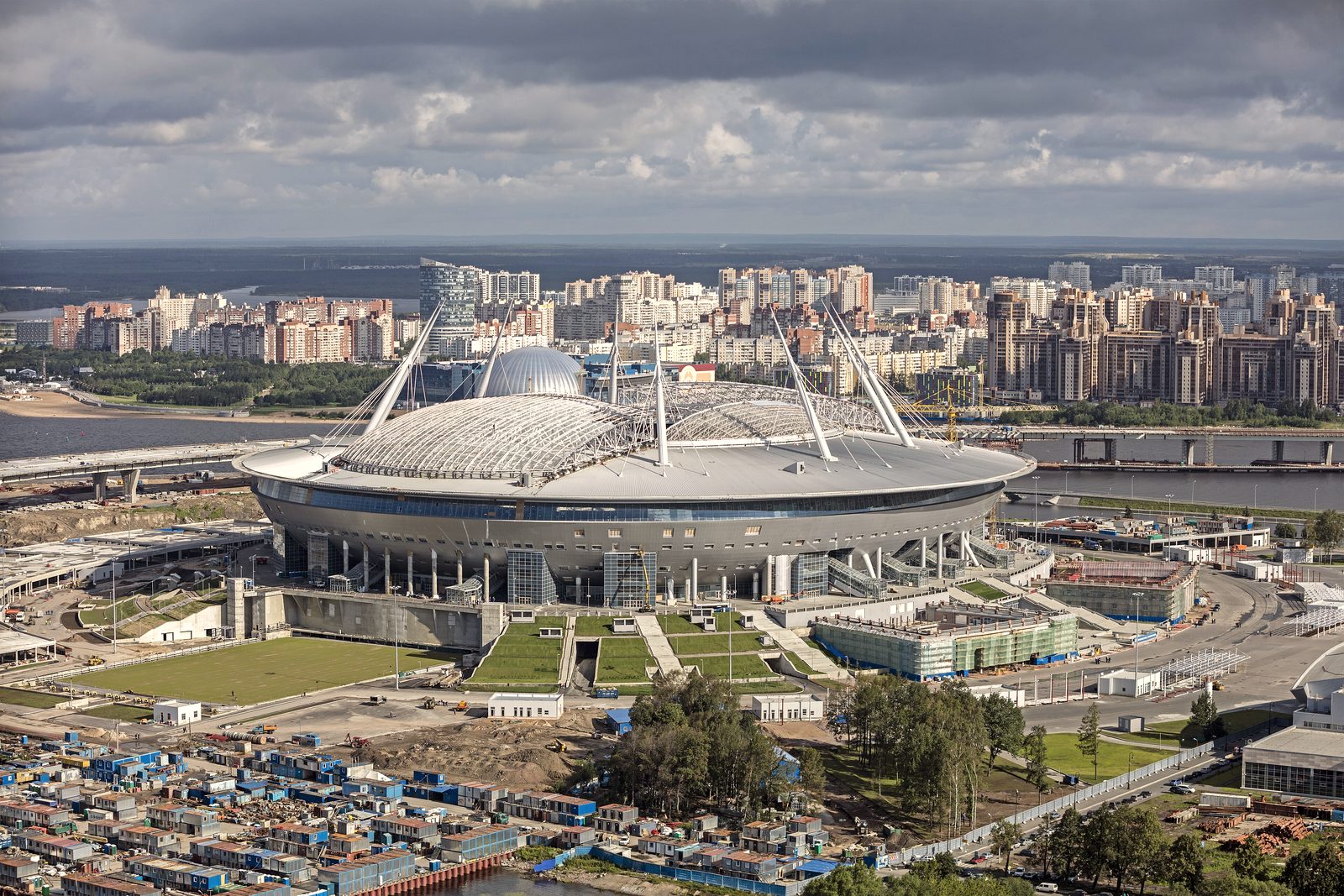
Photograph: Godot13 · CC BY-SA 4.0 · Wikimedia Commons
A generation of publicly subsidised venues built between roughly 1995 and 2010 has now operated long enough to assess against the projections used to secure the subsidy. Those projections were typically produced by consultants engaged by the party seeking the funding, and they generally forecast substantial net new local economic activity, employment and tax revenue.
The subsequent academic literature examining realised outcomes is, by the standards of applied economics, remarkably consistent. Across dozens of independent studies using different methods and jurisdictions, the finding is that subsidised venues generate local economic effects far below projection, and in a large proportion of cases indistinguishable from zero.
Substitution is the whole explanation
The mechanism is not complicated and it was identifiable in advance. Spending at a sporting event is overwhelmingly substituted from other local discretionary spending rather than added to it. A household attending a match spends money it would otherwise have spent at a restaurant, a cinema or a retailer in the same metropolitan area. The venue captures the spending; the region does not gain it.
Impact studies systematically overstate benefits by counting gross spending at the venue as new activity, applying multipliers to that gross figure, and omitting the offsetting decline elsewhere. When the same methodology is applied to the displaced spending, the net effect collapses.
Genuine net new activity comes only from visitors who travelled specifically for the event and would not otherwise have come, and who spend beyond the venue. That population is real but far smaller than projections assume, and it is concentrated in a handful of marquee events rather than a regular fixture list.
The money was not created. It was moved from the rest of the city into the building the city paid for.
The debt outlives the asset
A second problem has emerged that the original analyses did not contemplate: the financing frequently outlasts the venue’s competitive life.
Municipal obligations issued for venue construction commonly carry thirty-year terms. The functional lifespan of a major venue before it is considered commercially uncompetitive — inadequate premium inventory, insufficient concourse width, outdated technology infrastructure — has proven to be closer to twenty to twenty-five years.
Several jurisdictions are consequently servicing debt on venues that have been demolished or comprehensively replaced, sometimes while simultaneously issuing new debt for the replacement. This is not hypothetical; it has occurred in multiple American markets and in at least two European ones.
| Projection element | Typical claim | Observed |
|---|---|---|
| Net new local spending | Large positive | Near zero after substitution |
| Permanent employment | Thousands of jobs | Mostly part-time, event-day |
| Ancillary development | District-wide regeneration | Highly variable; depends on separate investment |
| Venue competitive life | 30+ years | 20–25 years |
| Synthesis of the published economic-impact literature. Arena Journal summary. | ||
What has changed in the drafting
Public authorities have not stopped funding venues, but the instruments have shifted in ways that reflect the accumulated evidence. Straight grants have become rarer. In their place: revenue-participation agreements giving the authority a share of naming rights or premium income, clawback provisions triggered by relocation within a defined period, community-benefit agreements with enforceable local hiring and access commitments, and in a small number of cases genuine public equity in the venue-operating entity.
These are meaningful improvements and they change the economics for clubs substantially. A subsidy that must be repaid from the revenue it enables is not a subsidy in the sense the 2000s understood the term; it is closer to concessionary financing.
The argument that remains
There is a defensible case for public venue funding, and it is not the economic one. A major sporting venue can be a civic asset in the way a concert hall or a public park is a civic asset — valuable because of what it provides to residents, not because of the tax receipts it generates.
That argument has the considerable merit of being honest, and it can be tested against the alternative uses of the same money, which is exactly the comparison an economic-impact study is constructed to avoid. Authorities that fund venues on civic grounds tend to negotiate better terms than those persuaded by a multiplier, because they are not relying on a number that will not survive contact with the evidence.