The Franchise Premium Has Stopped Rising
For two decades, sporting assets appreciated faster than the revenue beneath them. Three consecutive quarters of control transactions suggest that relationship has broken.
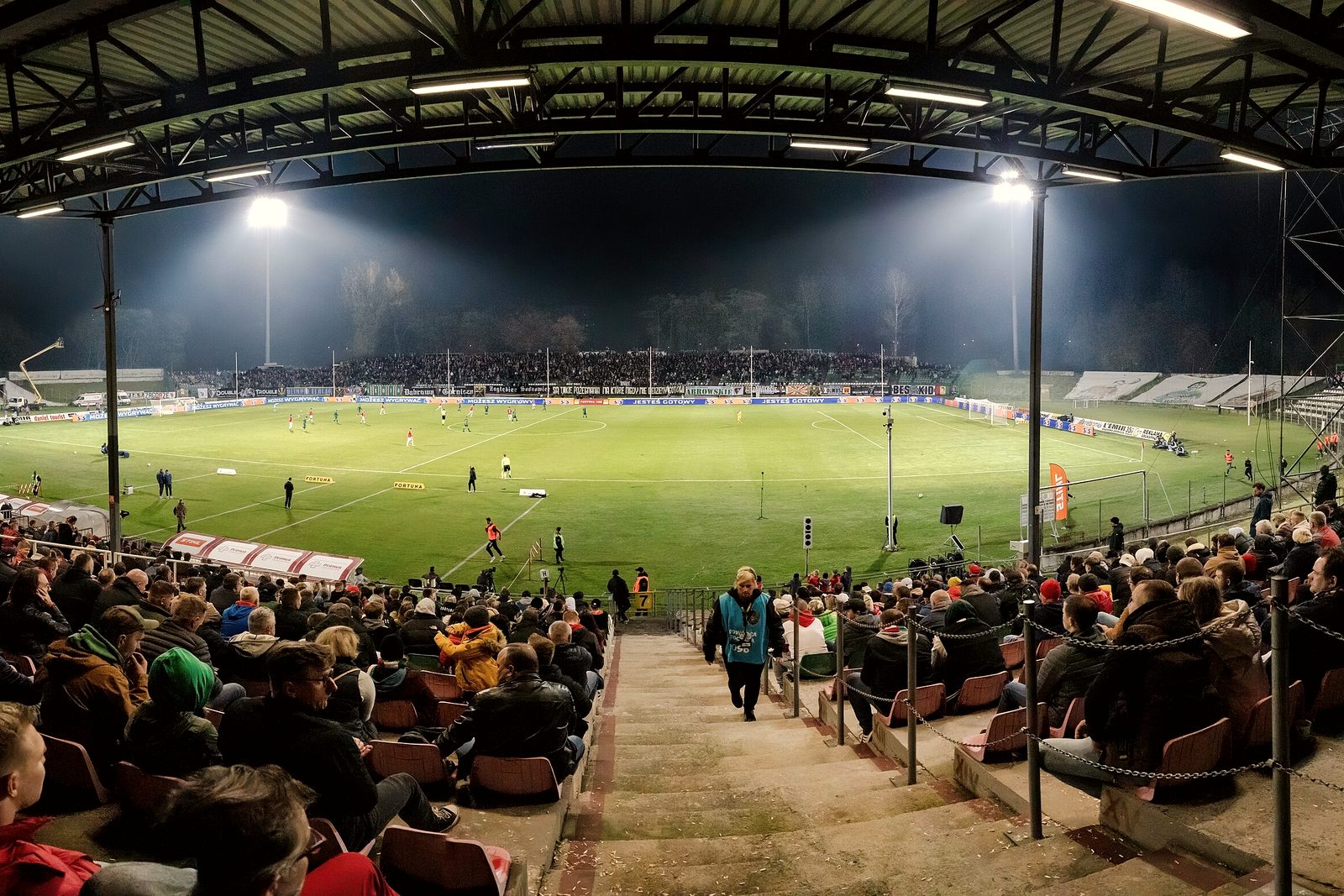
Photograph: Krzysztof Popławski · CC BY 4.0 · Wikimedia Commons
The defining financial fact of professional sport since the early 2000s has been that sporting assets appreciated considerably faster than the cash flows supporting them. A franchise or club sold for a multiple of revenue that rose in nearly every successive transaction, in nearly every major competition, through two recessions and a pandemic. The multiple expansion, not the revenue growth, produced most of the returns that drew institutional capital into the sector.
That relationship appears to have broken. Across the past three quarters, completed control transactions in the major North American leagues and in top-flight European football have cleared at multiples below comparable transactions eighteen months earlier, while the revenue of the assets involved has continued to grow. Prices have not fallen. The premium has stopped expanding, and in several cases has contracted.
Three things changed at once
The most straightforward explanation is the cost of capital, and it is a genuine part of the answer. An asset producing minimal current yield, held for appreciation, is worth less when the risk-free alternative pays meaningfully. Sporting assets were among the principal beneficiaries of a decade of near-zero rates and it would be strange if they were not among those repricing as that reversed.
But rates alone do not account for the pattern, because the compression is uneven in a way rate sensitivity would not produce. Two further changes matter more.
The buyer pool narrowed
The bid that set the market for a decade came from a small population: sovereign-linked entities, a few dozen individuals of sufficient wealth, and strategic groups assembling multi-club portfolios. Several of those buyers have completed their acquisitions and are not in the market. Several others face constraints they did not face in 2021 — regulatory scrutiny of ownership structures, restrictions on multi-club holdings within connected competitions, and in a small number of cases, political conditions in their home jurisdictions.
The financial sponsors who might otherwise absorb that gap have spent the past two years learning what exit looks like in this sector, and are approaching new commitments with considerably more discipline.
Supply increased
Simultaneously, the supply of available assets rose. Funds reaching term must transact. Expansion has added franchises. Several long-held family ownerships have reached generational transfer points. And the debt maturities working through the sector have pushed a number of owners toward partial disposals they would not otherwise have contemplated.
Fewer buyers, more sellers, and a scarcity story that expansion is actively undermining. The multiple was never going to hold all three.
The scarcity argument is being diluted by its owners
The intellectual foundation of the bull case was scarcity. There is one top-flight competition per market, a fixed number of members, and no mechanism by which a competitor can create a substitute. That argument was correct and it was the reason sporting assets deserved to trade above the multiple their cash flows implied.
Leagues have spent the past five years diluting it. Every expansion franchise is an additional unit of a supply that was supposed to be fixed. Every additional competition, every new international event, every franchise placed in a market previously served by one, marginally weakens the proposition on which the valuation rests.
Each of those decisions was individually profitable — expansion fees are, as we have written, the highest-margin transaction available to a closed league. Collectively they are an argument against the premise that made the assets valuable. It is difficult to sell scarcity while manufacturing supply, and the market has begun to price the contradiction.
What this is not
This is not a collapse and it should not be read as one. Sporting assets remain genuinely scarce relative to almost anything else, the revenue underneath them is still growing, and the institutional characteristics that make them attractive — durable audiences, defensible intellectual property, near-zero substitution — are unchanged.
What has changed is that the returns will now have to come from the operating business rather than from the multiple. An owner who buys at a flat multiple and sells at a flat multiple earns whatever the club earns, which for most clubs in most competitions is very little.
The consequence for how clubs are run
That is the development worth watching, and it will take years to become visible. For twenty years, club ownership was principally a bet on appreciation, and operating losses were acceptable because they were trivial against the capital gain. Under that regime, an owner had every reason to spend into competitive success and very little reason to care about margin.
If the appreciation stops, the calculation inverts. Owners who need the operating business to generate a return will run it differently: more attention to cost ratios, more willingness to sell playing assets, less appetite for the loss-funded pursuit of a trophy, and considerably more interest in the revenue lines that do not depend on winning.
Supporters have spent two decades complaining about owners who treat clubs as financial assets. They are about to discover what it looks like when those owners start expecting the asset to pay for itself.