The Retrofit Decade: Why New Stadiums Stopped Being the Answer
Construction cost inflation, tightening municipal appetite and a changed revenue mix have pushed the venue business from building new to rebuilding what exists.
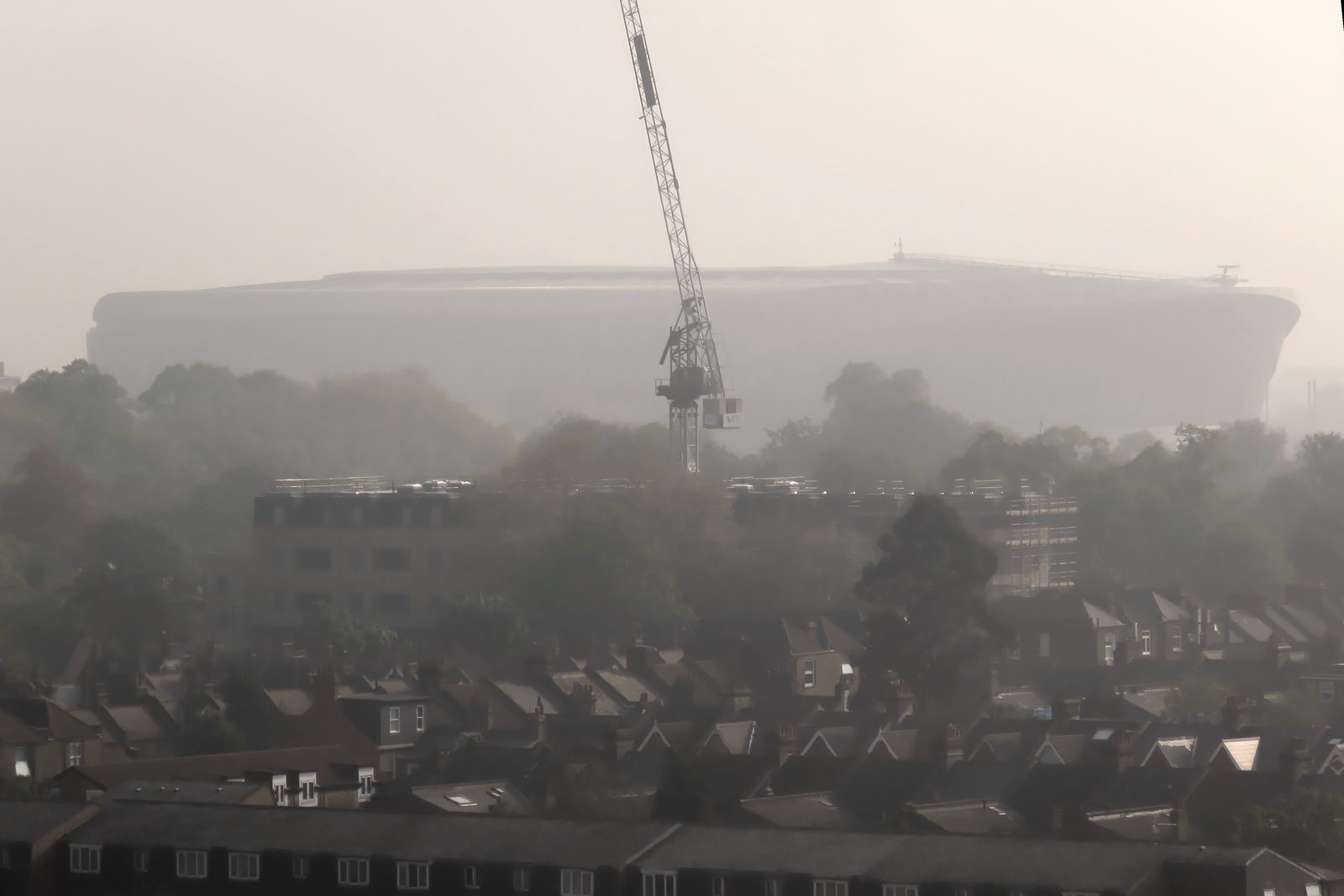
Photograph: Acabashi · CC BY-SA 4.0 · Wikimedia Commons
For twenty-five years the default answer to a venue problem in professional sport was a new venue. The economics were reliable: a modern stadium delivered a step change in premium inventory, a materially higher per-head spend, naming-rights income that legacy venues could not command, and frequently a public contribution justified by projected local economic activity. Clubs that built well were rewarded; clubs that did not fell behind.
That calculation has broken down, and not for a single reason. Three separate pressures have converged, and their combined effect is that the marginal large venue project is now more likely to be a reconstruction than a replacement.
Construction cost has outrun revenue
The first pressure is the most straightforward. Large-venue construction costs have risen substantially faster than the venue revenue lines that service them. Structural steel, concrete, curtain-wall systems and specialist mechanical and electrical work have all seen sustained inflation, compounded through 2021 by supply-chain disruption and labour scarcity in skilled trades.
Meanwhile the revenue case has not improved commensurately. Premium inventory pricing has grown, but general admission pricing is politically and practically constrained in most markets, and the naming-rights market has not expanded at the rate assumed in business cases written a decade ago. A project that penciled at a given cost per seat in 2015 does not pencil at today’s cost per seat against today’s achievable yield.
The industry is no longer building capacity. It is building margin inside capacity it already has.
Public money has become conditional
The second pressure is political. Public contribution to venue construction has not disappeared, but the terms have hardened considerably. Municipalities that funded venues in the 1990s and 2000s have had two decades to assess whether the projected economic benefits materialised, and the academic literature on that question is close to unanimous in finding that they largely did not.
Where subsidy is still granted, it increasingly arrives with conditions that would have been unusual a decade ago: community-benefit agreements, clawback provisions tied to relocation, local employment requirements, and in several recent cases a public equity or revenue-participation interest rather than a grant. These are reasonable protections. They also reduce the value of the subsidy to the club, which shifts the build-versus-retrofit calculation further toward retrofit.
The revenue mix changed shape
The third pressure is the most interesting. What a venue needs to deliver has changed. The dominant constraint on matchday revenue at most established clubs is no longer total capacity; it is the proportion of capacity that can be sold at premium yield.
A retrofit that converts twelve thousand general admission seats into four thousand club seats, eighteen hundred premium seats and thirty additional boxes reduces total capacity and increases matchday revenue, often substantially. It can be phased across successive close seasons, funded incrementally, and executed without relocating the tenant or seeking planning consent for a new site.
That is a fundamentally different kind of project from a new build, and it rewards a different skill set — phasing, temporary works, operating around an active fixture list — which is why a distinct tier of contractors has emerged specialising in exactly this work.
The clubs this leaves behind
Retrofit has a structural limitation that new build does not: it is bounded by the existing bowl geometry. Venues built with steep rakes, tight concourses or listed structural elements can absorb only so much premium conversion before the work becomes more expensive than replacement.
A number of clubs occupying historically significant grounds are approaching that boundary. Their options are narrowing to a choice they have spent years deferring: accept a permanently lower revenue ceiling than competitors with more adaptable buildings, or undertake a relocation that their supporters will resist and their local authority is unlikely to fund. That decision, rather than any question of squad investment, will determine the competitive trajectory of several well-known institutions over the coming decade.