The Olympic Ledger, Reconsidered
A Games delivered largely in existing venues has produced the first credible test of whether the host-city model can be made financially defensible.
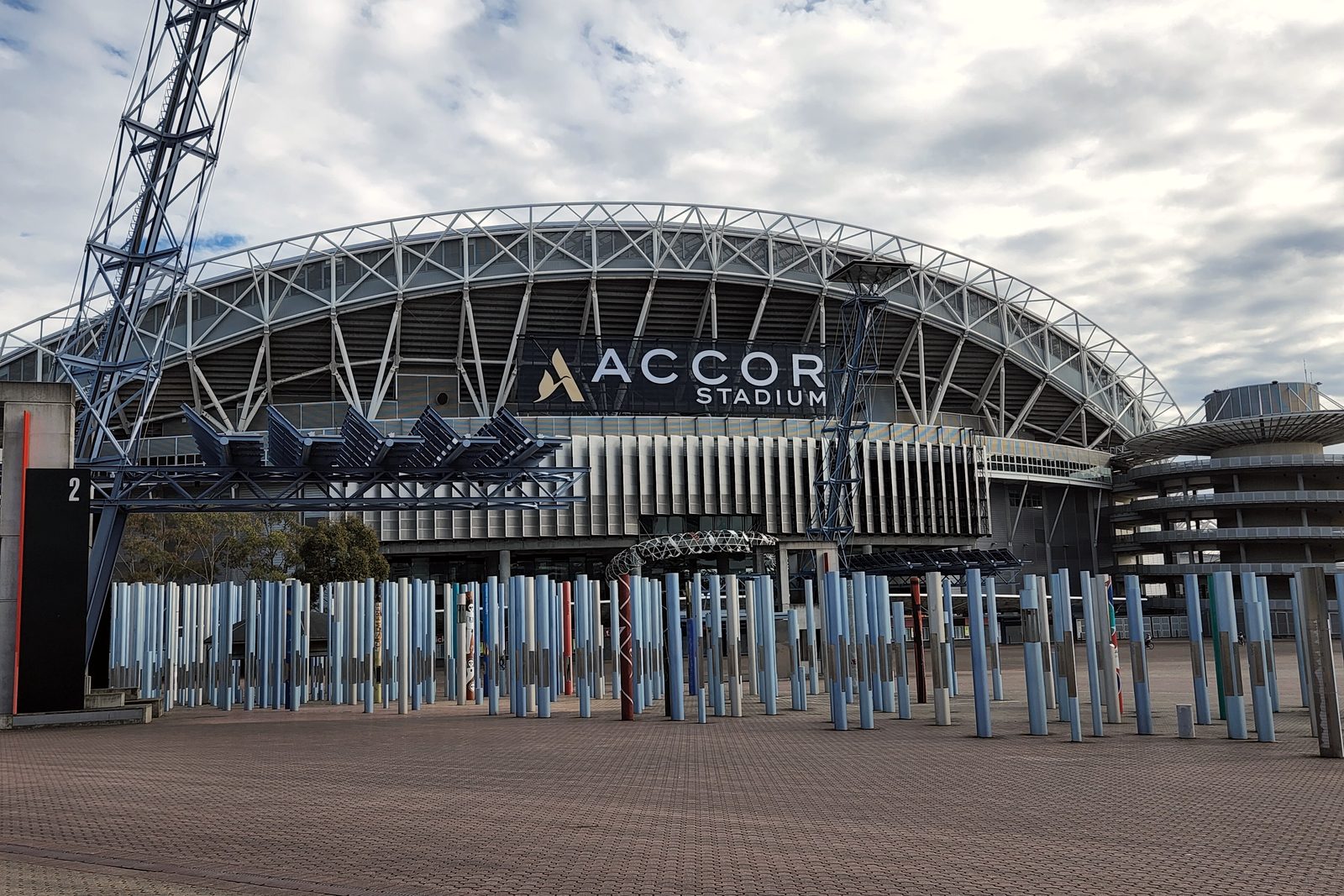
Photograph: Roadrunnerz45 · CC BY-SA 4.0 · Wikimedia Commons
The economics of hosting a summer Games have been, for four decades, among the most reliably disastrous in public finance. Cost overruns against bid budgets have been near-universal, frequently exceeding one hundred per cent, and the assets left behind have repeatedly proven expensive to maintain and difficult to programme.
This year’s edition was constructed explicitly as a response to that record, and it is worth examining what was actually done differently, because the changes are more structural than the presentation suggested.
The overrun was always in the venues
Decomposing historical overruns points consistently to permanent venue construction as the dominant contributor. Purpose-built facilities for sports with limited domestic participation — velodromes, aquatics centres, canoe slalom courses, shooting ranges — are expensive to build, have narrow post-Games utility, and are frequently delivered late, which compresses schedules and inflates costs across the entire programme.
The remedy applied was to minimise permanent construction: stage events in venues that already existed, including venues not designed for sport, and to build temporary structures that are removed afterwards. Temporary venues cost a fraction of permanent equivalents, carry no maintenance obligation, and cannot become a legacy liability because they cease to exist.
The cheapest venue is one that already exists. The second cheapest is one that will not exist in six months.
What remains hard to control
Two categories resisted the approach. Security is the first and largest. It is driven by threat assessment rather than by the sporting programme, it scales with the number of venues and the dispersal of the footprint, and a distributed model using existing city-centre venues is materially harder and more expensive to secure than a consolidated park.
Transport is the second. Existing venues are where they are, which is rarely where an efficient Games transport plan would put them. Athlete and official movement across a dispersed footprint requires substantially more vehicle capacity and more road-network intervention than a compact model.
These are real offsets against the venue savings, and honest accounting should net them. The saving is smaller than the headline comparison implies. It remains large.
| Driver | Consolidated park model | Distributed existing-venue model |
|---|---|---|
| Permanent venue capex | Very high | Low |
| Legacy maintenance liability | High, perpetual | Minimal |
| Security cost | Moderate | High |
| Transport & logistics | Low | High |
| Schedule risk | High — construction critical path | Lower |
| Directional comparison. Arena Journal framework. | ||
The bidding pool has changed
The strategic consequence is a narrowing of who can realistically host. If the model depends on already owning most of the required venues, then hosting becomes available principally to cities that have previously hosted, or that have large and diverse existing sporting infrastructure for other reasons.
That is a defensible outcome for the financial sustainability of the Games and it substantially undercuts the developmental case that has historically been made for awarding them to emerging markets. A city seeking to use the Games to accelerate infrastructure investment is, under the new model, precisely the city that should not be hosting, because building the infrastructure is the thing that destroys the budget.
The unresolved question
What has not been tested is whether the model survives contact with a host that wants the construction. The venue-minimising approach requires a host city willing to forgo the domestic political benefits of a large capital programme — the contracts, the employment, the visible regeneration — in favour of a leaner Games that leaves less behind.
That is a genuinely difficult sell to a local electorate, and it runs against the incentives of every actor in a host city except the finance ministry. The next two editions will establish whether this year represented a durable reform of the hosting model or a single well-executed exception by a city with unusually strong reasons to control its spending.