Crowd Noise, Synthesised: Broadcast Learns to Manufacture Atmosphere
The artificial-audience audio deployed across closed-door football was an emergency measure. It has quietly established that a meaningful part of the broadcast product can be produced rather than captured.
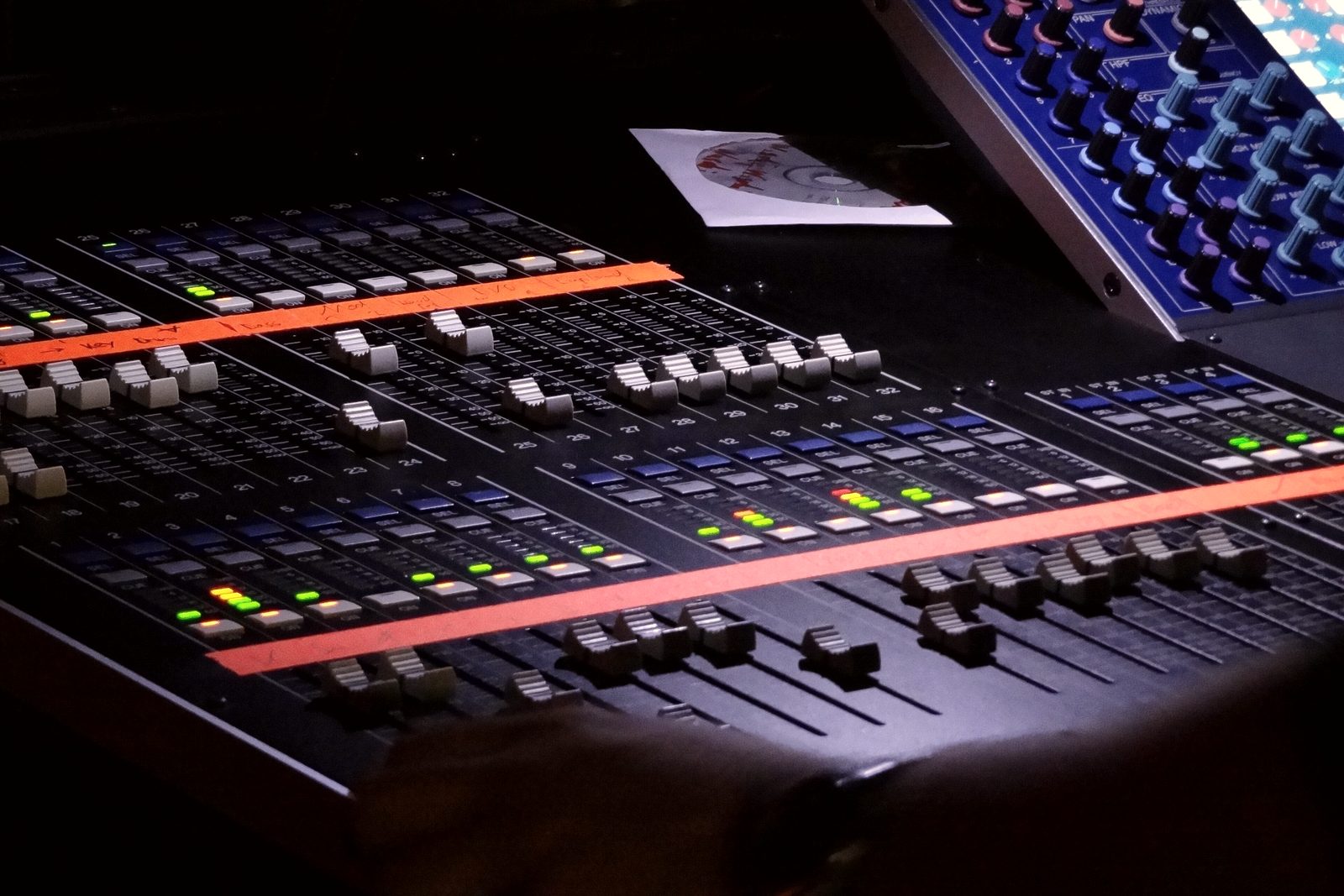
Photograph: beeki from Scheeßel, Germany · CC0 · Wikimedia Commons
Among the technical improvisations of this year, the one most likely to persist is also the one that attracted the least scrutiny. Within roughly eight weeks of football resuming behind closed doors, synthesised crowd audio went from an experimental option offered to a handful of broadcasters to the default feed across most major European competitions, with an opt-out rather than an opt-in.
The engineering is less exotic than the result suggests. The systems in widest use are libraries of recorded crowd response, segmented by club, by stadium section and by event type, triggered in real time by an operator working alongside the match director. A tackle, a near miss, a contentious decision and a goal each call a different bed, mixed against a continuous ambient layer keyed to the match state.
The audience preferred it
Broadcasters ran comparative testing in the summer, and the results were more decisive than most expected. Given a choice between a clean stadium feed with authentic but sparse ambient sound and a synthesised bed, viewers preferred the synthesised feed by substantial margins in every market tested. More surprisingly, a significant minority of viewers who were told the audio was artificial still preferred it, and a further group could not reliably identify which feed they were watching.
This should not have been surprising. Televised sport has been a heavily constructed product for forty years. Effects microphones are positioned to exaggerate ball contact; replays are graded; commentary is a narrative layer applied over the event. The synthesised crowd is a difference of degree rather than kind. What makes it notable is that it is the first element of that construction that substitutes for something the audience believes it is receiving directly.
Televised sport has always been produced. This is the first time a core sensory element has been generated rather than captured.
What exactly is being licensed
The commercial question this raises has not been addressed in any rights agreement currently in force, and it is not trivial. Stadium atmosphere is generated by supporters. It is captured by the host broadcaster under the league’s production arrangements and distributed as part of the licensed feed. When that atmosphere is instead synthesised from a library, the audio component of the broadcast becomes a separately authored work, with its own creation, ownership and potentially its own licensing chain.
In practice the libraries have been commissioned by leagues or their production partners, and ownership sits where one would expect. But the arrangement is undocumented in most rights contracts because the category did not exist when they were drafted. Several rights holders have begun adding explicit language covering synthesised or augmented audio to agreements now in negotiation, which is the clearest signal that the practice is expected to outlive the circumstances that produced it.
The obvious next step
Once a broadcaster is generating the crowd, personalising it is a small technical increment and a large commercial one. Feeds tailored to a specific supporter base — the away end’s perspective, the home end’s — are already technically straightforward and have been demonstrated internally at more than one production house. Beyond that sits commentary generated per market, per language and eventually per viewer, which is a considerably harder problem but no longer an obviously unsolvable one.
The strategic consequence is that the broadcast feed stops being a single product distributed widely and becomes a base layer over which distinct products are assembled. That has clear revenue implications for rights holders, who currently sell territorial exclusivity over an essentially uniform feed, and it complicates the pricing of exclusivity itself. If two broadcasters in adjacent markets are distributing materially different products built from the same base, the exclusivity they are buying is a narrower thing than it used to be.
A durable improvisation
None of this was anyone’s plan. Synthesised crowd audio was a fix for a problem that everyone assumed would last a few months. But it has been deployed at scale, tested against audiences, preferred by them, and written into contracts. That is the full lifecycle of a temporary measure becoming permanent infrastructure, compressed into about half a year.