The Regional Sports Network Unwind
Local media contracts signed against a subscriber base that no longer exists are being restructured through the courts. Franchises are discovering that guaranteed revenue was neither.
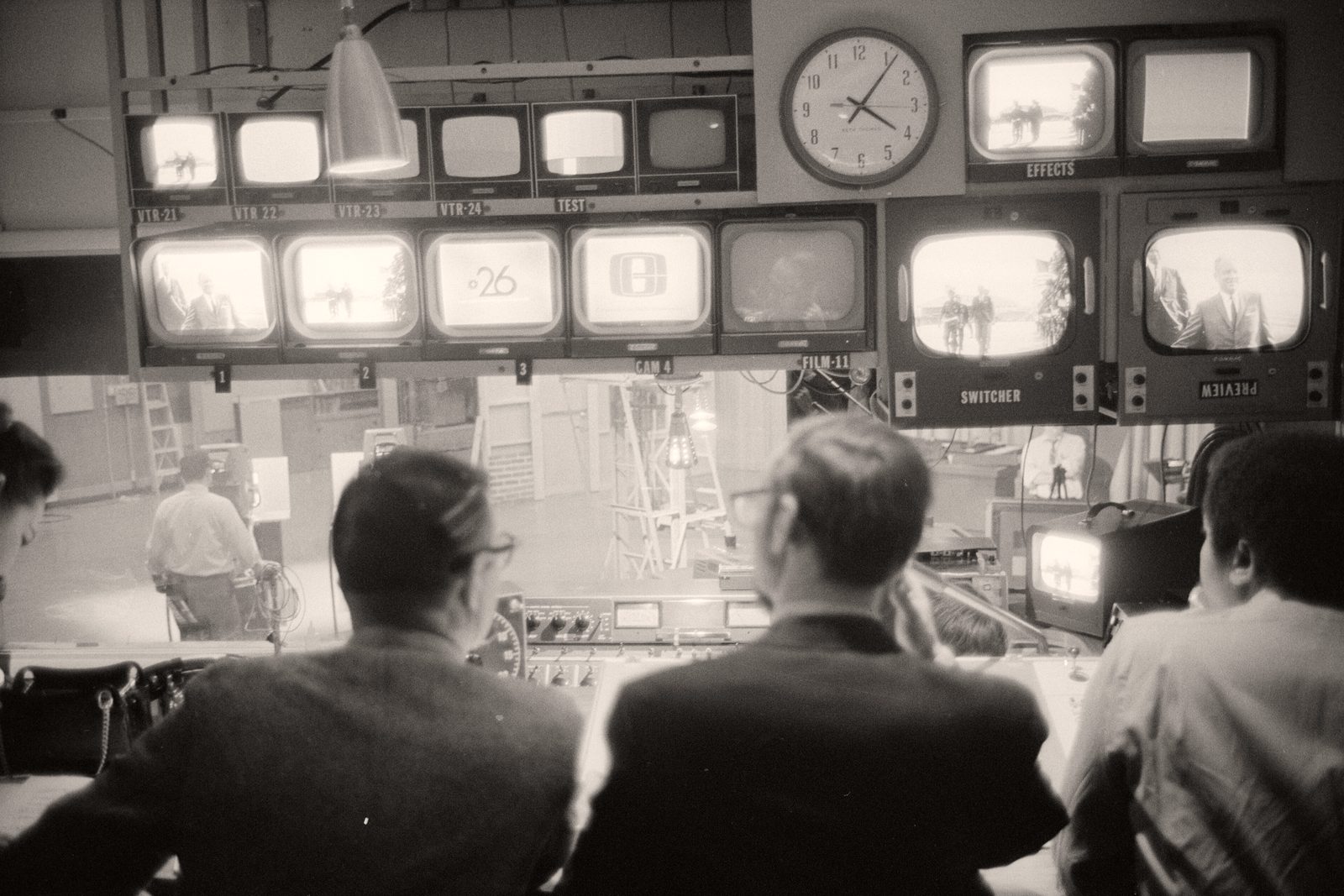
Photograph: Warren K. Leffler · Public domain · Wikimedia Commons
The regional sports network model was, for thirty years, one of the most reliable businesses in American media. A network acquired exclusive local rights to professional franchises, secured carriage on every cable and satellite system in the designated market area, and collected a per-subscriber fee from every household on the tier — a large majority of which never watched a single game.
The model required one condition: that essentially every household in the market subscribed to a bundle containing the network. That condition held from the early 1990s until roughly 2015 and has been deteriorating steadily since.
A contractual obligation against a shrinking base
The arithmetic is unforgiving. A network paying a franchise a contracted annual rights fee, escalating at a fixed rate, funded by a per-subscriber fee across a base declining in the mid-to-high single digits annually, has a widening gap between fixed obligation and variable revenue.
That gap has now been widening for the better part of a decade. The rights agreements were, in many cases, signed between 2010 and 2016, at the peak of the bundle and with escalators that assumed continued growth. Several carry annual obligations comfortably exceeding the network’s total revenue attributable to that franchise.
A twenty-year contract written against a subscriber base that has fallen by a third is not a contract. It is a claim in a future restructuring.
Restructuring as a repricing mechanism
Because these obligations cannot be renegotiated consensually — a franchise has no incentive to accept less than its contract provides — the mechanism resolving them has been insolvency. A restructuring process allows the rejection of contracts determined to be burdensome, which converts an above-market rights obligation into an unsecured claim and permits the network to re-contract at a rate the economics support.
For franchises this is a profound shift. Local media income has been treated in ownership valuations, in payroll planning and in league revenue-sharing calculations as a contracted certainty. It is now demonstrably contingent on the solvency of a counterparty whose business model is in structural decline.
| Element | Legacy model | Post-reset |
|---|---|---|
| Payer | All bundle households | Actual viewers |
| Revenue basis | Carriage fee × base | Subscription × converted fans |
| Contract certainty | Fixed, escalating | Variable, shorter |
| Typical outcome vs. legacy | — | Materially lower |
| Directional framework. Outcomes vary widely by market size and franchise appeal. Arena Journal analysis. | ||
The direct-to-consumer arithmetic
The proposed replacement is direct distribution: the franchise or league sells a local streaming subscription straight to fans in the market. This is strategically sound and financially much smaller, and it is important to be precise about why.
Under the carriage model, a network collecting a monthly fee from, say, two million bundle households generates revenue from all two million. Under direct distribution, the addressable population is the households that will actively pay for that franchise — historically a small fraction of the bundle base, even in markets with strong followings.
For the revenue to be maintained, the direct subscription price must be several multiples of the carriage fee. Some markets will support that; most will not. The realistic outcome for the majority of franchises is local media revenue permanently below the legacy level, with the gap widest in mid-sized markets where the bundle base was large relative to the genuinely committed audience.
Consequences beyond the income statement
Two second-order effects deserve attention. The first is competitive: leagues that share national media revenue but allow franchises to retain local media revenue have a built-in disparity that has been widening for years and will now move discontinuously. Franchises in large markets with viable direct-to-consumer propositions will separate further from those without.
The second is that the audience will get smaller before it gets more valuable. A local broadcast available to every household in a market performs a function beyond revenue: it recruits the next generation of supporters at zero marginal cost. Moving behind a paywall optimises current monetisation at the expense of future audience formation, and the cost of that trade will not appear in any financial statement for fifteen years.